The reconfiguration of global supply chains has placed Latin America in a strategic position.
Proximity to major markets, trade agreements and competitive labor costs have made the region increasingly attractive for manufacturing and industrial investment.
This shift has been widely discussed.
What is less examined is how unevenly that opportunity is being captured.
Recent analysis shows that while multiple countries are positioned to benefit from nearshoring, their ability to translate that position into sustained industrial activity varies significantly .
Some ecosystems are evolving toward higher levels of sophistication, integrating advanced manufacturing, life sciences and knowledge-based services.
Others remain constrained by structural limitations that affect execution.
At the same time, perspectives from Mexico highlight a different dimension of the same issue.
Even in one of the most strategically positioned countries for nearshoring, factors such as infrastructure gaps, regulatory friction and security concerns can limit the ability to fully capitalize on incoming investment .
This contrast reveals a deeper dynamic. Nearshoring is not defined only by geography. It is defined by readiness. Readiness, in this context, is not a single variable.
It is the alignment of multiple conditions that allow industrial operations to perform consistently.
Infrastructure is one of the most visible elements.
Reliable energy, water availability, logistics networks and connectivity determine whether facilities can operate without disruption.
When these elements are unstable, operational risk increases regardless of location advantages.
Institutional conditions also play a critical role.
Clarity in regulatory processes, predictability in enforcement and consistency in policy create an environment where long-term investment becomes viable.
When these conditions fluctuate, decision-making becomes more complex.
Companies must account for uncertainty beyond technical considerations.
Another key factor is industrial maturity.
Countries that have developed specialized sectors tend to attract more complex operations.
Costa Rica, for example, has built capabilities in life sciences and advanced manufacturing, allowing it to capture investment beyond basic assembly processes .
This level of specialization influences the type of facilities that are developed.
It affects design requirements, operational standards and long-term scalability.
By contrast, environments that have not reached similar levels of maturity may still attract investment, but often in less complex segments.
This does not diminish their relevance. It defines their position within the broader value chain. From a project perspective, these differences are critical.
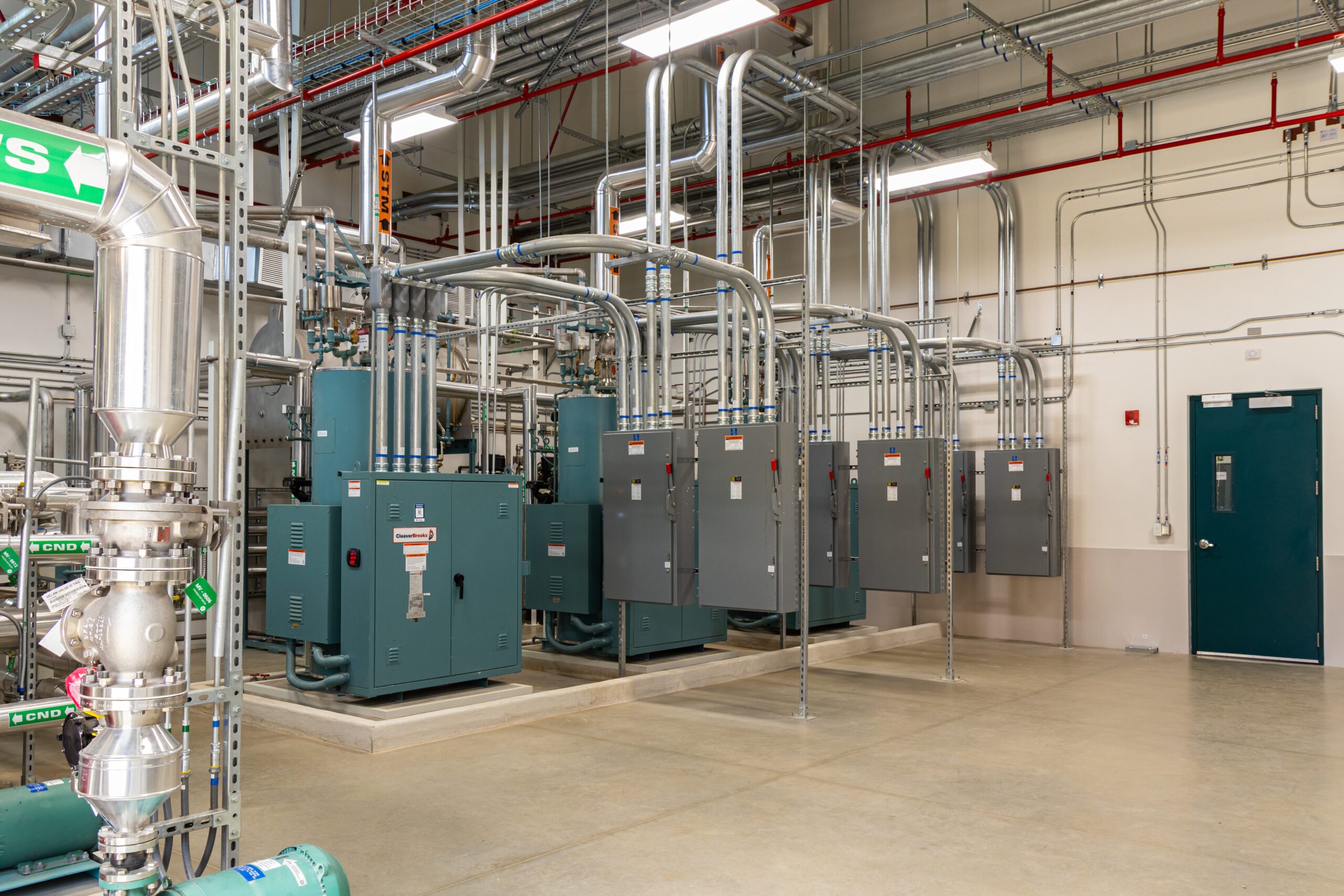
Facilities designed for highly specialized operations require a different level of integration, precision and reliability.
They depend on stable conditions and consistent execution.
Facilities developed in less mature environments may need to incorporate additional safeguards to manage variability.
This shifts the role of design.
It becomes a mechanism for compensating gaps.
Redundancy, flexibility and resilience are no longer optional considerations.
They are integral to ensuring operational continuity.
Another dimension that shapes readiness is workforce capability.
Access to talent is often cited as a strength across the region.
However, the ability to sustain specialized operations depends on more than availability.
It requires continuous training, alignment with evolving technologies and retention of skilled professionals.
Facilities that rely on advanced processes must consider how these dynamics will evolve over time.
Nearshoring also introduces time pressure.
Companies are seeking to relocate or expand operations quickly in response to global supply chain disruptions.
This accelerates decision-making.
Projects are expected to move from concept to execution within compressed timelines.
In environments where underlying conditions are not fully aligned, this speed can introduce additional risk.
Decisions made under time pressure may overlook structural constraints that become visible later.
This reinforces the importance of early-stage clarity.
Understanding the real conditions of a location goes beyond evaluating incentives or proximity.
It involves assessing how infrastructure, regulation, talent and industrial capability interact.
This assessment is not static. It evolves as projects progress.
Countries that appear equally attractive at a high level may diverge significantly during execution.
This is where readiness becomes evident.
Not as a theoretical concept, but as a practical condition that shapes outcomes.
For industrial facilities, this distinction has direct implications.
Projects that assume uniform conditions across the region risk misalignment.
Those that recognize variability and plan accordingly are better positioned to perform consistently.
In this context, the conversation around nearshoring shifts. It is no longer centered on where to locate. It is centered on how to operate.
And that question depends less on geography and more on the conditions that support execution.
Sources:
- El país de Centroamérica que está aprovechando mejor el nearshoring y cuántos millones puede atraer. https://www.elfinancierocr.com/internacionales/el-pais-de-centroamerica-que-esta-aprovechando/S2SCRBRX6RAZNGZEJ574Y4CVXM/story/
- Nearshoring: la oportunidad que México podría dejar pasar. https://oem.com.mx/elheraldodechihuahua/analisis/nearshoring-la-oportunidad-que-mexico-podria-dejar-pasar-28892510
More Insights

April 15, 2026
Growth Is Not the Challenge. Consistency Is.

January 13, 2026
Surface Solutions Group to Bring Advanced Coating Processes for Medical Devices to Costa Rica with an Investment Exceeding US$10 Million
July 17, 2025